By Patricia Falcetta | Neurodiversity Advocate, Speaker & Inclusion Consultant
Moving beyond neurodiversity training to build inclusive systems that support neurodivergent employees.
In my work as a neurodiversity speaker delivering neurodiversity training and workshops, I am seeing more organisations begin this journey. Encouragingly, I have seen less of what I call the “tick and flick” approach and more of a shift towards an awareness perspective. Workplaces are investing more time and energy into building sound foundations of knowledge and awareness of this ever-evolving topic.
In my work as a neurodiversity speaker delivering neurodiversity training and workshops, I am seeing more organisations begin this journey. There is increasing investment in research into understanding the many neurodivergent brain types. This means the subject matter is constantly evolving, and I am learning new information in this space every day.
What is a Neuro-Inclusive Workplace and Why It Matters for Leaders
I am seeing that workplaces are investing in neurodiversity training, hosting panels, and starting important conversations. This progress is encouraging. Awareness and the desire to better understand neurodivergent brain types is an important first step.
But increasingly, I find myself asking a different question.
What happens after the awareness training?
I have become increasingly aware that awareness on its own doesn’t change someone’s day-to-day experience at work.
One of the biggest gaps I continue to see is this: many workplace support models are still built around disclosure of diagnosis. Support is often only offered once someone has formally identified as neurodivergent, shared that information, and in many cases, justified what they need.
This is where we start to miss the point of what true inclusion really is.
True inclusion means creating workplaces where support is not dependent on disclosure. The reality is that, because of unconscious bias and judgement, not everyone feels safe to disclose. There is still much stigma around diagnoses of Autsim, OCD and ADHD to name a few.
It is also important to recognise that not everyone has access to diagnosis. It can be expensive, time-consuming, and, for many, simply out of reach. Often those who are able to access diagnosis have financial and socio-economic privilege. In addition to this, many people are still navigating their own understanding of how their brain works.
When inclusion relies on disclosure, we unintentionally create a system where people must prove their needs before they are supported.
That is not inclusion.
If we are serious about building neuro-inclusive workplaces, then we need to shift our focus from individual accommodation to inclusive system design. Systems that are flexible, predictable, and supportive by default. Systems that recognise that people think, communicate, and work differently.
Because when we design workplaces in this way, we don’t just support those who disclose.
We create environments where everyone is given the opportunity to thrive.
Reframing Support: It Shouldn’t Depend on Diagnosis
One of the questions I was asked during a recent neurodiversity panel I sat on was whether we should support people differently depending on diagnosis or disclosure.
It’s a powerful question, because it goes to the heart of how most workplaces are currently designed.
In principle, support should never depend on diagnosis. If it does, we are unintentionally creating a system where people have to earn support by disclosing something deeply personal. We are asking people to explain themselves, justify themselves, and in some cases, relive experiences that may not feel safe to share.
The unfortunate reality is that many neurodivergent people have been exposed to systemic, institutional, or personal harm. Many have experienced a consistent lack of psychological safety in environments that were not designed with them in mind.
And yet, in practice, this is exactly how many workplace systems still operate.
Support becomes reactive. It is offered once someone discloses, once challenges become visible, or once performance is impacted. Often, by this point, the individual has already been navigating significant stress, masking, or burnout.
What if we changed this approach? How can we change this approach?
It comes down to simple, nuanced changes in language and approach. For example: Instead of asking: “What’s your diagnosis?”, or requiring disclosure of diagnosis for support, we can start asking: “What helps you do your best work?”
That shift might seem small, but it fundamentally changes the way we design work.
It moves us away from a deficit-based model, where the individual is seen as needing to be “accommodated”, and towards a strengths-based, human-centred approach where flexibility is built in from the start.
This is where universal inclusive practices become so important.
Universal practices include:
- Offering flexibility as the standard, not an exception
- Designing roles and workflows that support different thinking styles
- Creating clarity around expectations and communication
- Normalising conversations about how people work best
- Being open to exploring changes to the physical working environment
When these practices are embedded, support is no longer dependent on disclosure. It becomes part of how the organisation operates. The impact of this extends far beyond neurodivergent employees. It benefits all employees.
This is because when we design systems that support different ways of thinking, processing, and communicating, we create better conditions for everyone, including those who are undiagnosed, those who choose not to disclose, and those navigating other life experiences that affect how they show up at work.
To me the fundamental question is: Is the individual disabled, or is the environment disabling them?
Moving from awareness to action is not by asking individuals to adapt to the system, but by designing systems that adapt to people.
The Problem with Traditional “Professionalism”
Another theme that came through strongly in the panel discussion was how often workplace expectations around “professionalism” unintentionally excludes neurodivergent people.
The reality is that many of these expectations have never really been questioned. They have simply become accepted societal norms.
We have inherited an idea of professionalism that values sameness.
Sameness in communication style.
Sameness in behaviour.
Sameness in how people show up, speak, and interact.
What is forgotten is that no two individuals are the same – the ways we think, process, communicate, or regulate ourselves are all different.
For many neurodivergent individuals, traditional workplace norms can feel confusing, exhausting, or even unsafe.
Things like:
- Being expected to maintain constant eye contact
- Interpreting tone, indirect communication, or unspoken rules
- Sitting still for long periods in meetings
- Being judged on how something is said, rather than what is being said
These expectations are often seen as neutral. The reality though is that they are not. They are shaped by unconscious bias about what professionalism “should” look like.
When those expectations are not met, individuals can be labelled as difficult, disengaged, or not a “cultural fit”.
What is happening in these moments is not a lack of capability. They are differences in communication style, sensory needs, or regulation.
This is where masking begins.
Masking is when a neurodivergent person consciously or unconsciously suppresses their natural behaviours to meet workplace expectations. It might look like forcing eye contact, overthinking communication, staying silent in meetings, or pushing through sensory discomfort just to appear “professional”.
It is important to acknowledge that everyone masks at times, whether neurotypical or neurodivergent. The difference is that neurodivergent individuals mask more frequently and with greater intensity.
On the surface, masking can look like someone is coping. However, underneath, it often comes at a significant cost mentally, emotionally, and physically.
Over time, this can lead to:
- Chronic stress
- Burnout
- Disengagement
- A loss of confidence and identity
For organisations, it often leads to something else: the quiet loss of talent. When people do not feel safe to be themselves, they will eventually leave, either physically, or through disengagement.
This brings us to an important question.
Rather than asking:
“How do we help people fit into our culture?”
Perhaps we need to ask:
“What kind of culture are we creating, and who does it work for?”
When we begin to rethink professionalism through an inclusive lens, we create space for different communication styles, different ways of thinking, and different ways of contributing.
This does not lower standards. It strengthens them. It allows people to contribute in ways that align with how they think and operate best.
When we get this right, this is where we begin to see the real benefits of neurodiversity in the workplace, not just in wellbeing, but in innovation, problem-solving, and performance. When people feel psychologically safe their brilliant ideas and innovation for complex problems come to the fore.
What Neuro-Inclusive Workplaces Do Differently
“What does this actually look like in practice? How do workplaces ensure this level of psychological safety?
Moving towards a neuro-inclusive workplace does not require a complete overhaul overnight. It begins with small, intentional shifts in how we design systems, lead teams, and communicate expectations.
It is about being deliberate in creating environments that support different ways of thinking, working, and contributing.
From my work delivering neurodiversity training and workshops across organisations, I often see the same turning point. It happens when leaders move from simply understanding neurodiversity, to actively embedding inclusion into how their workplace operates.
This is where real change begins.
Neuro-inclusive workplaces tend to focus on a few key areas:
- Designing for Flexibility, Not Exception
Embedding inclusive workplace practices from the start
Flexibility still tends to be treated as something that needs to be requested and approved. In inclusive workplaces flexibility is built into the system from the outset.
This might look like:
- Having a sensory risk assessment framework as part of your onboarding process.
- Offering flexible work hours or hybrid options where possible
- Allowing different approaches to task completion
- Providing choice in how work is structured and delivered
- Offering flexible options for feedback and contribution in team meetings
When flexibility becomes standard practice, individuals no longer need to justify why they need it, because flexible approaches are embedded in the team culture. This is where all employees benefit and thrive.
2. Creating Clarity in Communication
Supporting neurodivergent employees through clear expectations
Clear communication is one of the most powerful inclusion tools available, yet it is often overlooked. The reality is that many neurodivergent individuals thrive in environments where expectations are explicit rather than implied. Neurodivergent individuals can struggle when there is ambiguity or a lack of clarity, particularly when expectations are left open to interpretation.
This can include:
- Providing written follow-ups after meetings
- Allowing 36- 48 hours to provide ideas and thoughts after meetings for slow processors
- Being clear about priorities, deadlines, and outcomes
- Reducing reliance on indirect or ambiguous language
Clarity reduces cognitive load. It also reduces misunderstandings across the entire team.
3. Prioritising Psychological Safety
The Foundation of a neuro-inclusive workplace
Psychological safety is not a “nice to have”. It is foundational to a thriving workplace with low staff turnover. Low levels of psychological safety mean people will continue to mask, disengage, or avoid asking for support.
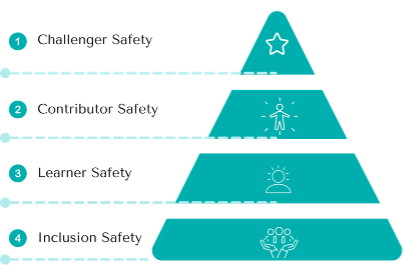
As Timothy Clarke’s model shows here inclusive workplaces actively create environments where people feel safe to:
- Ask questions
- Share ideas
- Challenge ideas and the status quo
- Express when something is not working
- Be open about how they work best
This requires leadership that is consistent, self-aware, and willing to challenge unconscious bias.
4. Shifting from Accommodation to Design
Moving beyond reactive support to systemic inclusion
Many organisations are still relying heavily on having to make individual accommodations. Inclusive organisations will actively move towards designing systems that reduce the need for accommodations in the first place.
This can include:
- Rethinking recruitment processes to reduce bias
- Designing meetings that allow for different participation styles
- Creating environments that consider sensory needs, such as noise, lighting, and space
The goal is not to fix the individual or ask the individual to go with the status quo – the goal is to design environments that are not disabling to anyone.
5. Involving Neurodivergent Voices
Why lived experience must shape workplace design
One of the most common mistakes organisations make is designing for neurodivergent people without involving them in the process.
True inclusion means listening to lived experience.
This can look like:
- Seeking input from neurodivergent employees
- Creating safe channels for feedback
- Involving people in the design of policies, spaces, and systems
When people feel heard, inclusion becomes something that is lived, not just stated.
Bringing It All Together
None of these changes are complex on their own.
However, when they are embedded consistently, they begin to reshape workplace culture in a meaningful way.
This is the work I do with organisations through neurodiversity training and workshops and leadership development – supporting leaders to move beyond awareness and build practical, sustainable approaches to inclusion that benefits everyone.
When workplaces are designed with inclusion in mind, they do not just support neurodivergent employees, they create better environments for all people to do their best work and to thrive in their space.
Where to From Here? Moving Beyond Awareness to Build Neuro Inclusive Workplaces
How organisations can move from neurodiversity awareness to inclusive leadership
There is no doubt that awareness creates an important starting point.
It opens conversations.
It brings visibility to neurodivergent experiences.
It encourages many organisations to begin their inclusion journey.
However, awareness on its own is not enough to create lasting change. And this is what workplaces are recognising because increasingly they are asking for tangible tools to build truly inclusive teams and workplaces.
They are recognising that real inclusion asks more of us. Real inclusion asks us to look beyond individual behaviours and begin examining the systems, environments, and expectations we have built over time. It asks us to question what we have accepted as “normal” and consider who those norms may be excluding.
It asks us to shift from good intentions to meaningful action. Real inclusion is about workplaces shifting from unconscious incompetence to conscious competence.
As this visual demonstrates the unconscious in competence is the awareness stage the conscious competence is when this is mastery and second nature in workplaces.
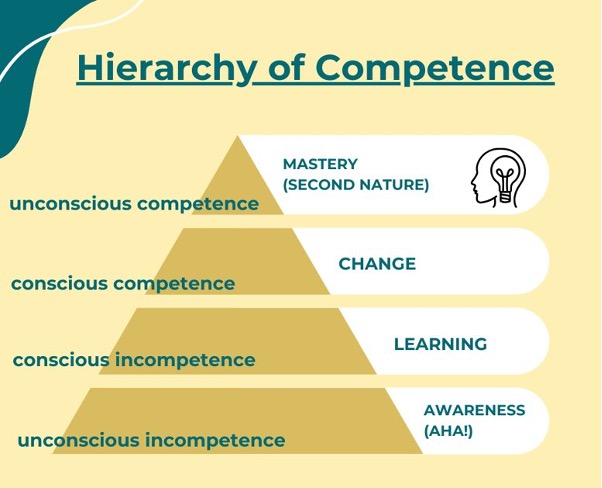
Achieving conscious competence is not easy work. It requires reflection, curiosity, and a willingness to do things differently. It also requires us to recognise that we are all part of the system, and therefore all part of the solution.
For leaders, this begins with small but powerful shifts in thinking.
You might start by asking:
- Where in our workplace is awareness being mistaken for inclusion?
- Who might be masking or holding back because they do not feel psychologically safe?
- What systems, from recruitment through to performance reviews, may be unintentionally excluding people?
- How can we design our environment so that support is available to everyone, not just those who disclose?
These are not questions that need immediate perfect answers.
They are starting points for better conversations.
Because inclusion is not a one-off initiative or a single training session. It is an ongoing commitment to designing workplaces where people feel safe, valued, and able to contribute in ways that align with how they think and work best. It is conscious competence.
When we take this approach, the impact extends far beyond neurodivergent employees. We begin to build workplaces that are more adaptable, more human, and more effective. We have workplaces where difference is not just accepted but understood and valued.
A Final Reflection
I often come back to a simple but important question that I have already mentioned:
Is it the individual who is disabled, or is the environment disabling them?
When we begin to view inclusion through this lens, it changes how we lead, how we design, and how we show up for one another. This is because true inclusion is not about asking people to fit in – it is about creating environments where people no longer feel the need to.
If This Is Something You’re Exploring
If your organisation is at the beginning of this journey, and looking to move to conscious competence you are not alone.
Many workplaces are currently navigating how to move from awareness to meaningful action. The most important step is a willingness to start, to learn, and to listen.
Through my work as a neurodiversity speaker and in delivering neurodiversity training and workshops, I support organisations to build this understanding and translate it into practical, sustainable change.
If this is a conversation you are starting within your workplace, I encourage you to keep going. The workplaces that invest in this work now will be the ones that lead with empathy, innovation, and impact into the future.
If your organisation is exploring neurodiversity training or looking to build a more neuro-inclusive workplace, this is where the work begins.